

Why Two-Thirds of All Named Stars Have Arabic Names
Q: Why do so many stars in the night sky have Arabic names?
Iqbal Latif:
Because during the Islamic Golden Age, particularly between the 8th and 11th centuries, the Arabic-speaking world became the global hub of astronomical knowledge. The House of Wisdom in Baghdad, under the Abbasid Caliphate, translated vast bodies of Greek, Persian (Sassanid), Indian (Vedic), and Roman scientific texts into Arabic. The most impactful of these was Ptolemy’s Almagest — a Greek astronomical treatise that was translated into Arabic and then widely studied, commented upon, and improved.
Q: So the naming of stars in Arabic comes from this translation movement?
Iqbal Latif:
Yes. When Greek star names were translated into Arabic, they were often adapted to the phonetics and semantics of the Arabic language. Later, during the European Renaissance, these Arabic versions were translated again—this time into Latin. But often the translations were poor or phonetic approximations, preserving the Arabic forms. That’s why stars like Betelgeuse retain Arabic roots—”Ibt al-Jauzā’”, meaning “Armpit of the Great One”, referring to its position in the Orion constellation.
Q: Who were the major astronomers behind this Arabic star cataloging?
Iqbal Latif:
One towering figure was al-Sufi (Azophi), who lived between 903–986 CE. His masterpiece, Kitab al-Kawakib al-Thabit al-Musawwar (The Book of Fixed Stars), mapped and described 48 constellations and over 1,000 stars, correcting Ptolemy’s positions and including his own observations. His work served as the foundation of stellar naming that persisted into Europe’s scientific revival.

Q: Why did Arabs, particularly desert nomads, care so much about stars?
Iqbal Latif:
For Bedouins and pilgrims crossing the vast, featureless deserts of Arabia, the night sky was their map. With no cloud cover and no artificial light, the stars provided the most consistent navigational tool. The fixed stars became reference points. The Hajj pilgrimage routes from Baghdad to Mecca were navigated this way. This necessity turned astronomy from a scientific curiosity into a survival tool.
Q: Can you give more examples of Arabic star names and their origins?
Iqbal Latif:
Certainly. Take Acamar, from Arabic Ākhir an-Nahr, meaning “End of the River”, the southern end of the constellation Eridanus. Or Aldebaran, from al-Dabarān (“The Follower”), which trails the Pleiades cluster in the sky. Or Vega, from al-Nasr al-Waqi‘ (“The Falling Eagle”), which Latin scholars shortened. These names preserve rich layers of observational, linguistic, and poetic history.
Q: What role did India and Hindu-Arabic numerals play in this scientific flourishing?
Iqbal Latif:
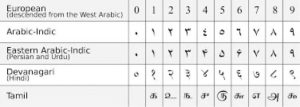
India’s mathematical insights, especially the decimal number system and the concept of zero, were revolutionary. Mathematicians like al-Khwarizmi and al-Kindi integrated these ideas into Islamic science. The numerals 0-9, which we now call Hindu-Arabic numerals, were transmitted to Europe through Arabic texts in the 12th century. This synthesis of knowledge from Greek, Vedic, and Sassanid sources helped build a powerful scientific foundation.
Q: What happened to this era of astronomical and mathematical excellence?
Iqbal Latif:
When the spirit of inclusion died, the culture of enquiry within Islamic civilization waned. As orthodoxy grew, the open, inquisitive intellectual environment that once nurtured al-Sufi, al-Khwarizmi, and Avicenna diminished. The Islamic world, once a beacon of enlightenment, gradually turned away from science and philosophy, ceding its leadership in knowledge to Europe.
Q: What is the key takeaway from this history?
Iqbal Latif:
The stars still whisper the names of those who once looked up with curiosity and translated wonder into knowledge. Arabic names in our night sky are not just linguistic artifacts—they are monuments to an era when Baghdad was the center of the cosmos, when knowledge knew no borders, and when inclusion led to illumination.
#IqbalLatif
“When inclusion died, enquiry died in Islam. The stars remain our witnesses.”